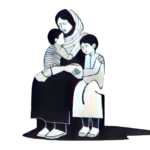
When a country experiences war or profound political upheaval, ordinary people bear the greatest burden. Among them, women and children are often the ones who suffer the most, carrying the lasting consequences long after the fighting ends.
As part of the AIPS–UEFA Young Reporters Programme covering the UEFA Women’s Under-19 Championship in Bosnia and Herzegovina, I met Hajradinović Almina, a young Bosnian woman whose reflections on her country’s past offered more than a history lesson. Her story became a reminder that while every conflict is different, the human experience of loss, resilience and hope often connects people across borders.
Remembering Bosnia’s War
Speaking about war is never easy. Memories remain sensitive, and every community has its own experiences and perspectives. Yet for many people in Bosnia and Herzegovina, the war of the 1990s represents years of immense hardship and survival.
Almina describes those years with honesty.
“Life during the war was extremely difficult. People faced enormous challenges, but they never lost their hope or dignity. Many families had little food, water, electricity or heating, yet they continued to endure and believed in a better future for their country.”
The conflict disrupted every aspect of daily life. Families were displaced, communities were divided, and women and children faced some of the harshest consequences of the violence.
Protecting Education During Conflict
Education also became one of war’s greatest challenges.
Schools were interrupted, buildings were damaged, and normal learning became impossible in many areas. Yet teachers and families continued searching for ways to educate children whenever circumstances allowed.
For many Bosnians, preserving education was about protecting the future. Even in the darkest moments, learning represented hope that life would eventually move forward.
Football as a Symbol of Unity
Football holds a special place in Bosnian society. Beyond competition, it has become a source of unity and national pride.
“Football is very important for people in Bosnia,” Almina says. “When people step onto the pitch, many of their differences disappear. Ethnicity, religion and politics matter less than playing together and representing the country.”
One of Bosnia and Herzegovina’s most recognised footballers, Edin Džeko, also grew up during the war before going on to captain his national team and build an international career. His journey represents resilience for many young Bosnians.
A New Opportunity for Young Girls
Hosting the UEFA Women’s Under-19 Championship is an important milestone for women’s football in Bosnia and Herzegovina.
For many young players, the tournament offers far more than competitive matches. It provides experience, confidence and the belief that they belong on the international stage.
“The Under-19 Championship is very important for our girls,” Almina explains. “It allows them to develop as players and feel proud to represent their country. This is an important experience, and we hope it creates even more opportunities for future generations.”
Thinking of Afghan Women
Listening to Almina’s story inevitably reminded me of Afghanistan.
Although Bosnia and Afghanistan have different histories, one painful reality is familiar: when conflict or major political change reshapes a country, women and children often experience the greatest loss.
Over the past five years, Afghan women and girls have faced sweeping restrictions on many aspects of public life. Many girls have been unable to continue secondary and higher education. Many women have lost access to employment in numerous sectors, while opportunities to participate freely in sports and public life have become severely limited.
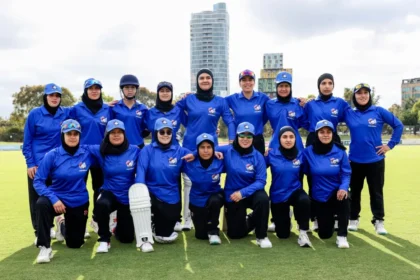
For female athletes, the challenges have been particularly profound. Many have seen their sporting careers interrupted or ended altogether. Others have left the country to continue pursuing their dreams abroad, while many inside Afghanistan remain unable to compete openly.
Beyond education, employment and sport, many Afghan women say they no longer feel able to fully participate in society or speak freely about their aspirations. For countless girls, dreams that once seemed achievable have been placed on hold.
Yet hope has not disappeared.
Afghan women continue to advocate for education, opportunity and dignity. Around the world, Afghan students, journalists, athletes and activists continue working to ensure that the voices of Afghan women are not forgotten.
Hope Beyond Conflict
The stories of Bosnia and Afghanistan remind us that wars and crises may destroy homes, schools and communities, but they cannot permanently erase hope.
Today, young girls in Bosnia dream of representing their country through football and building a brighter future. Afghan girls continue to dream of a day when they can once again study freely, work, compete in sport and contribute fully to their society.
Women’s stories are never only stories of suffering.
They are also stories of resilience, courage and determination—proof that even after the darkest chapters of history, hope continues to survive.